
HMI FOR EV-CHARGING AND PARKING PAYMENT
HMI for EV charging and parking payment
EV charging infrastructure only succeeds when uptime, payment reliability and user interaction work together under real-world conditions. Public charging stations require secure, intuitive and long-term reliable interfaces.
Discover matching solutions for EV charging
HMI FOR EV-CHARGING AND PARKING PAYMENT
HMI FOR EV-CHARGING AND PARKING PAYMENT
HMI FOR EV-CHARGING AND PARKING PAYMENT
Engineering requirements for rugged conditions
EV charging systems combine power electronics, communications and user interaction in one distributed platform. Failures can interrupt energy delivery, payment processing and the full customer journey.
Three priorities define reliable charging interfaces:
- System availability: continuous operation without service interruptions
- Payment integration: fast, secure and flexible transaction handling
- Physical robustness: reliable performance under outdoor and public-use conditions
Where charging, parking and payment converge
Charging hubs, parking garages, retail locations and highway fast-charging stations increasingly require one seamless experience: authenticate, charge and pay without friction.
- Higher utilization of charging assets
- Flexible billing models combining parking and energy usage
- Improved customer retention through seamless interaction
The role of the HMI in system reliability
The human-machine interface is the most exposed and frequently used part of the system. It must remain reliable across weather, moisture, temperature changes, continuous interaction and mechanical stress.
Any failure at this level directly affects usability and revenue, making HMI design a reliability factor—not just a visual interface.
Components designed for EV infrastructure
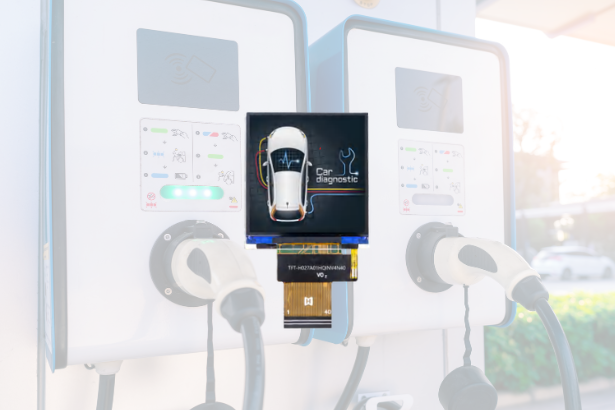
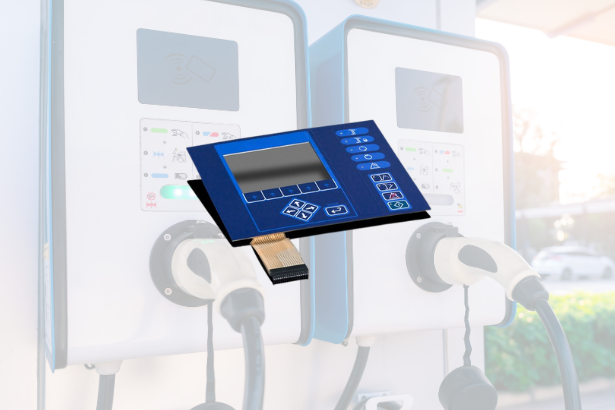
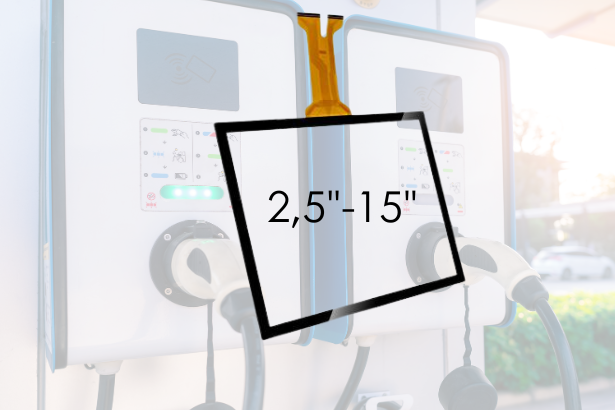
Rugged touch displays, custom membrane keyboards and mechanical keypads combine precise interaction with the robustness required for public charging infrastructure.
- Thick protective glass and impact resistance
- Sealed, cleanable membrane surfaces
- Low-profile integration for compact front panels
- Custom layouts, graphics and backlighting
- Long-term availability and retrofit-ready design
Designed for long-term infrastructure
With product availability exceeding 10 years and long-term aftersales support, HMI components can remain stable within platforms that operate over long lifecycles. This simplifies maintenance strategies and supports retrofit scenarios without complete redesigns.